Introduction
The employee engagement topic has risen among the top and most critical priorities of the modern business world. During a period of remote working, digital transformation, automation, and the fastchanging trends of the workforce, the traditional engagement methods such as yearly surveys, office perks, and in-person supervision have already lost their effectiveness. Today’s workers demand not only decent pay but also, meaningful work, continuous feedback, flexible environments, growth opportunities, and a strong sense of belonging, all supported by tech.
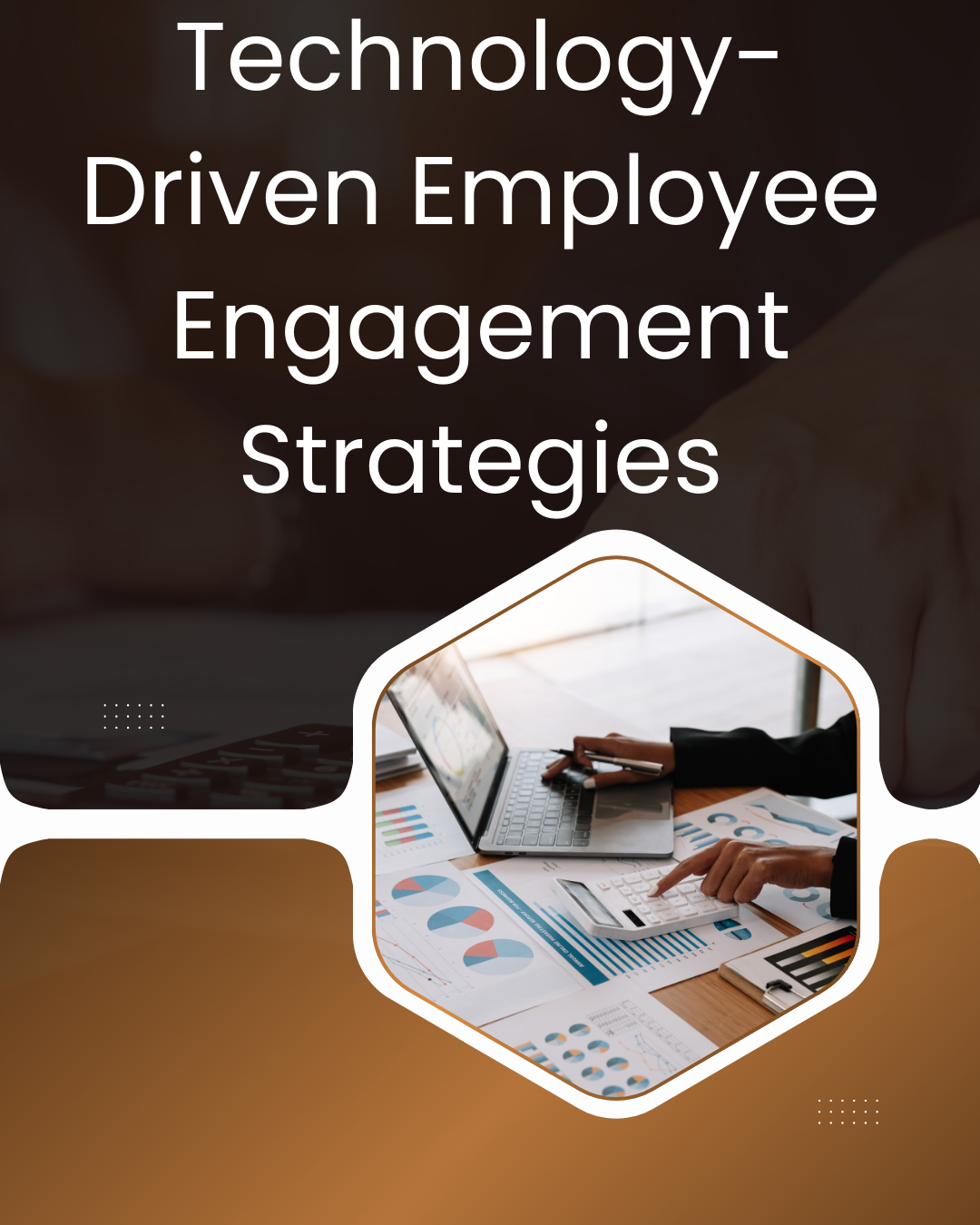
Technology-driven employee engagement strategies turn to digital tools, platforms, and data to connect, motivate, and produce a high-performing workforce. Technology-Driven Employee Engagement Strategies.These strategies do not stop at communication tools and the like but rather engage with developing an employee-centric experience that supports collaboration, recognition, learning, well-being, and purpose – no matter where the employees are.
Companies that make good use of technology to engage their staff claim that it leads to higher productivity, easier retention, better collaboration, and improved business outcomes. On the other hand, the use of technology in engagement must be done with care. The mere acquisition of new tools does not imply engagement; the secret is in technology coexisting with human needs, the organization’s culture, and strategic goals.
This thorough guide infers how technology is changing the employee engagement landscape, highlighting key digital strategies and tools, and giving hands-on advice on how to build a sustainable, tech-fueled engagement framework for the future workspace.
Chapter 1: Understanding Employee Engagement in the Digital Era
1.1 What Is Employee Engagement?
Employee engagement is the term that encompasses the emotional, cognitive, and behavioral involvement which the staff members exhibit towards their organization and its objectives. An engaged workforce is characterized by their motivation, high productivity, creativity, and the readiness to take on extra responsibilities besides the minimum required.
Engagement consists of:
Emotional connection to the job
Feeling of purpose and belonging
Energy and eagerness
Ready to help and change for the better
Besides, in the era of digitalization, the above-mentioned engagement will be influenced by different technology-based experiences which are going to determine the way the employees will communicate, cooperate, learn, and develop.
1.2 The Shift from Traditional to Digital Engagement
Meanwhile, the traditional way of engagement was mainly depending on physical presence, face-to-face management, and feedback at intervals.Technology-Driven Employee Engagement Strategies. On the other hand, the digital engagement will be:
Full-time rather than occasional
Based on data rather than subjective
Unique for everyone rather than standardized
No matter where the employee is
With the help of technology, it is now possible for engagement to become part of the daily duties rather than being a separate HR initiative.
1.3 Why Engagement Matters More Than Ever
The consequences of low engagement are:
High employee turnover
Burnout
Decreased productivity
Negative customer experience
Conversely, high engagement is connected with:
Increased output
More loyal customers
Greater breakthroughs
Healthy organizational culture
Technology gives the organizations the chance to deal with engagement in a proactive and not in a reactive manner.
Chapter 2: The Role of Technology in Employee Engagement
2.1 Technology as an Engagement Enabler
Improvement in communication and transparency
Enabling real-time feedback
Supporting collaboration across teams
Personalizing employee experiences
Providing actionable insights through data
The intention is not to eliminate human interaction but to strengthen it.
2.2 Core Categories of Engagement Technology
The main categories are:
Communication and collaboration platforms
Employee feedback and survey tools
Recognition and rewards systems
Learning and development platforms
Performance management systems
Well-being and mental health tools
HR analytics and engagement dashboards
Every category deals with a certain aspect of employee engagement.
Chapter 3: Digital Communication as the Basis of Engagement
3.1 The Necessity of Open Communication
Trust, alignment, and inclusion are caused by communications that are clear and consistent. Technology-Driven Employee Engagement Strategies.The use of technology facilitates the establishment of open communication throughout the whole organization regarding information.
3.2 Collaboration Platforms
The use of digital collaboration tools makes it possible for:
Instant message communication
Creation of team channels
Exchange of files
Collaboration between different departments
These tools cut down on silos and enhance the interconnections of teams.
3.3 Video and Virtual Interaction
Communication by video makes it possible to have:
Connection among remote team members similar to face-to-face one
Visibility of leadership
Virtual town halls
Team-building activities
By regularly employing virtual interaction, the feelings of isolation are mitigated and the emotional engagement is reinforced.
3.4 Asynchronous Communication
Tools that are asynchronous make it possible for workers to communicate with one another regardless of the time differences between them, which in turn allows for more flexibility and a better work-life balance.
Chapter 4: Real-Time Feedback and Listening Tools
4.1 Moving Beyond Annual Surveys
Annual engagement surveys are a kind of a thing of the past, or at least they are in environments that are constantly changing. Technology makes the continuous listening possible.
4.2 Pulse Surveys
Pulse surveys offer:
Fast feedback
Present-day insights
Data that can be acted upon
This gives organizations the power to take care of problems before they become bigger.
4.3 Digital Suggestion Platforms
Digital feedback platforms invite employees to:
Give their ideas
Make their complaints
Be part of the invention
This nurtures a culture where people participate and feel ownership.
4.4 AI-Driven Sentiment Analysis
The employee feedback gets evaluated by AI to discover the trends, the risks, and the factors of engagement, which in turn helps to make decisions in a proactive manner.
Chapter 5: Recognition and Rewards Through Technology
5.1 The Importance of Recognition
Recognition certifies the effort put in and encourages good behavior. Technology facilitates the process of making recognition visible, frequent, and universal.
5.2 Digital Recognition Platforms
Such platforms permit:
One-on-one recognition among employees
Public expression of gratitude
Recognition that is in line with company values
Recognition is woven into the daily work of employees.
5.3 Gamification of Engagement
Engagement is gamified with the help of:
Points
Badges
Leaderboards
Gamification is a way to make the process of participation more enjoyable and to promote a friendly contest.
5.4 Personalized Rewards
Technology can provide personalized rewards according to each employee’s liking, which in turn can make the reward more emotionally engaging.
Chapter 6: Learning and Development as an Engagement Strategy
6.1 The Link Between Growth and Engagement
Employees who perceive opportunities for growth are not only more engaged but also more loyal.Technology-Driven Employee Engagement Strategies. Continuous development is supported by digital learning platforms.
6.2 E-Learning and Microlearning
Digital learning tools offer:
Courses available anytime
Short lessons that are precise and suited to the learner’s needs
Learning at a speed comfortable to the learner
Such learning practices would be perfectly integrated in modern workflows.
6.3 AI-Powered Learning Recommendations
AI studies both the skill gaps and the career aspirations and thus, suggests personalized learning paths.
6.4 Social Learning and Knowledge Sharing
Technology encourages peer-to-peer learning via:
Forums for discussions
Networking groups
Mentor-mentee programs
Learning becomes a process that is both social and engaging.
Chapter 7: Performance Management in a Digital Workplace
7.1 Continuous Performance Feedback
Digital tools for managing performance have been incredibly supportive:
Regular check-ins
Tracking of goals
Feedback all the time
This situation puts aside the old system of yearly reviews.
7.2 OKRs and Goal Alignment
With the aid of technology, the individual goals were made to fit with the company-wide goals that made their purpose and clarity higher.
7.3 Data-Driven Performance Insights
Analytics give us:
Data about performance that is objective
Insights about skills
Areas for development
This is a way to fairness and transparency.
Chapter 8: Supporting Employee Well-Being Through Technology
8.1 Well-Being as a Core Engagement Driver
An Employee who is engaged is the one that is healthy. Technology is the solution for the well-being of physical, mental, and emotional.
8.2 Digital Mental Health Tools
The platforms will give:
Resources for coping with stress
Access to counseling services
Mindfulness classes
These instruments will lead to a decrease of burnout and an increase of employees’ strength.
8.3 Workload and Burnout Monitoring
A computer program based on AI is used to analyze the workload of the workers and detect the risk of burnout at an early stage.
8.4 Flexible Work Technology
Flexible work technology is a support for employees and it enables them to work according to their own hours making it easier for them to manage their work and personal life.
Chapter 9: Building Community and Culture Digitally
9.1 Creating Belonging in Remote Teams
Strategies for Digital Engagement are:
Virtual social events
Online communities
Groups of interest
9.2 Digital Onboarding Experiences
Technology is the one that signifies the new employees as being present and connected from the very first day.
9.3 Diversity, Equity, and Inclusion (DEI) Technology
DEI platforms are the means through which inclusive practices are made possible:
Tools that are free from bias when hiring
Communications that are open and friendly
Opportunities that are accessible to everyone
Chapter 10: Using Data and Analytics to Drive Engagement
10.1 Engagement Metrics That Matter
The most important metrics are:
Scores of engagement
Rates of retention
Levels of participation
Activity related to learning
Indicators of well-being
10.2 Predictive Analytics
The prediction models will pinpoint the areas of disengagement that are likely to occur and let the organizations take action at an early stage.
10.3 Turning Insights into Action
Building trust and increasing engagement through data will require that such data be translated into meaningful actions.
Chapter 11: Challenges in Technology-Driven Engagement
The most common challenges are:
Overloading with tools
Adoption that is not satisfactory
Concern over privacy
Digital fatigue
Lack of involvement of the leadership
The right engagement will require the combination of balance, simplicity, and human-centered design.
Chapter 12: Best Practices for the Implementation of Engagement Technology
Best practices consist of:
1. Aligning tools with strategy
2. Involving employees in the selection of the tools
3. Giving training and support
4. Integrating platforms
5. Measuring impact continuously
Chapter 13: The Future of Employee Engagement Technology
The following trends are emerging:
1. AI-powered engagement facilitators
2. Customized employee experiences
3. Virtual workplaces that are immersive
4. Emotion-sensitive analytics
5. Automation that is human-centric
Engagement will be increasingly incorporated into the daily work experience.
Conclusion
The use of technology-driven employee engagement strategies is changing the way organizations interact with, support, and inspire their employees. Technology can, if used responsibly and thoughtfully, reinforce communication, recognition, and growth, and it might even play a role in the support of well-being and the creation of community—no matter where the physically located people are.
But it is not enough to have technology.Technology-Driven Employee Engagement Strategies. True engagement will be there when digital tools are merged with empathetic leadership, inclusive culture, and a well-defined organizational purpose. By adopting a strategic, human-centered approach to engagement technology, organizations can create teams that are resilient, motivated, and ready for the future and excel in the digital era.